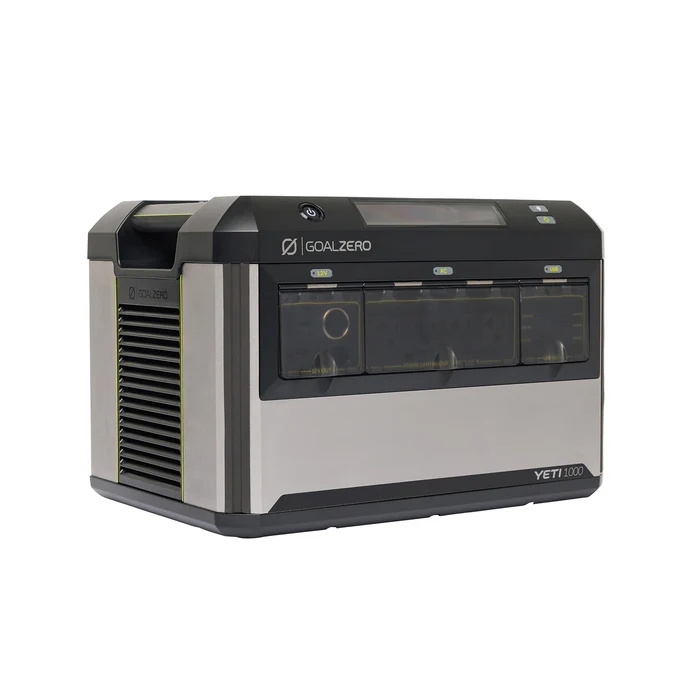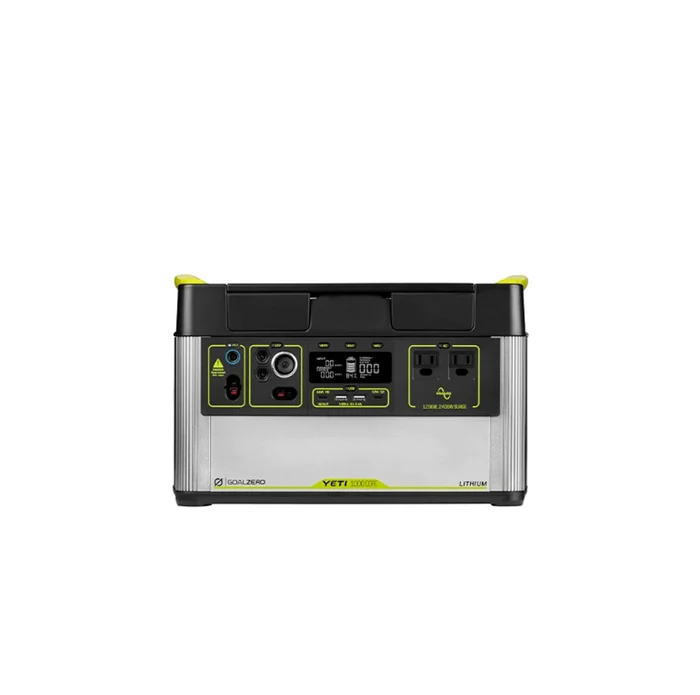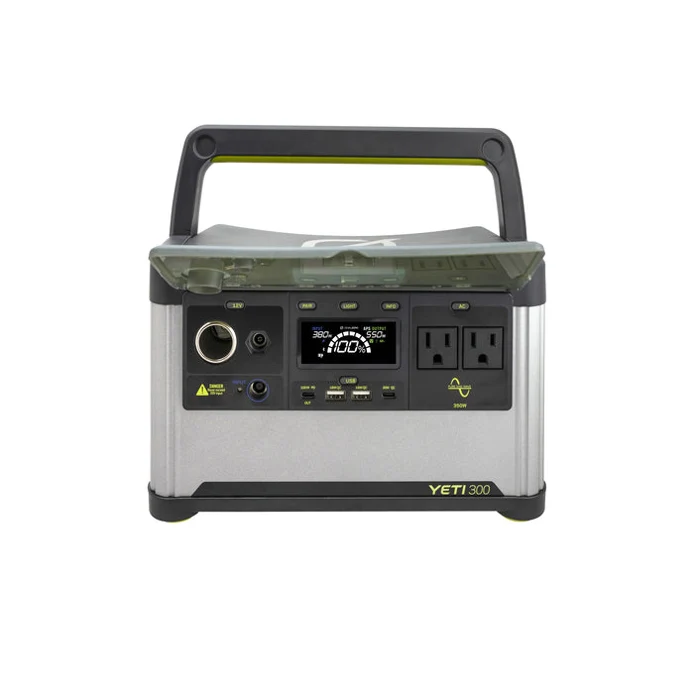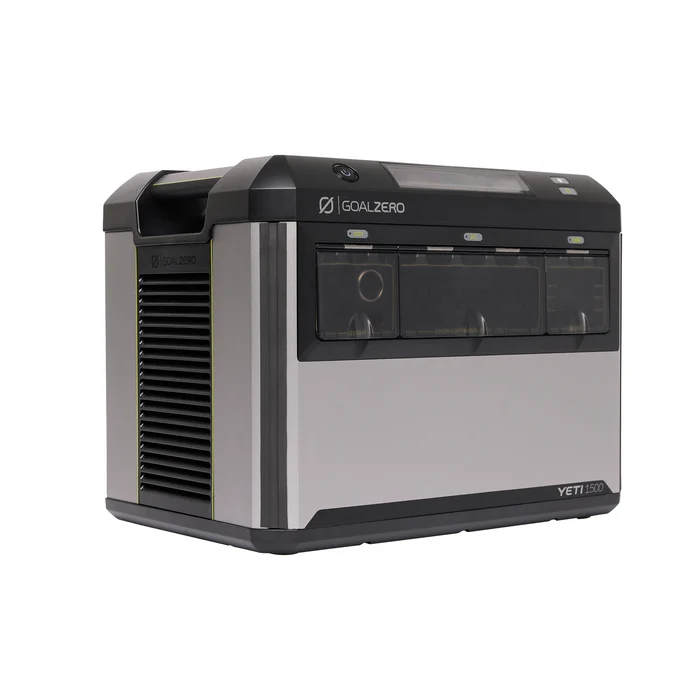
Some stations are portable mainly because one person can move them when necessary. The Goal Zero Yeti 1500 is in that category, with a listed 52.75-pound weight and a battery reserve intended for substantial selective backup.
Capacity for a Longer Device List
The published specification lists roughly 1,505Wh and a 2,000W inverter. I'd decide which loads need to run together and which can wait. Even a capable inverter doesn't make the stored energy unlimited, especially with cooking or heating equipment.
- Capacity: 1,505.28Wh.
- AC inverter: 2,000W.
- Weight: 52.75 pounds.
- Weather specification: IPX4.
Choose the Charging Mode Deliberately
The specification lists 1,500W fast AC input and a lower default charging speed. Faster refilling can be useful when power is available for a short window, but the supply circuit must suit the draw. I'd check the complete charging requirements rather than treat the largest input as appropriate for every outlet arrangement.
The solar section distinguishes high-voltage and low-voltage inputs with separate limits. Compatible panel voltage, connectors, and combined rules matter before ordering accessories.
USB Can Avoid an Extra Adapter
The published output list includes higher-power USB-C options. A compatible laptop or phone may use those directly, leaving AC outlets for devices that actually need them. The cable and charging protocol still determine what power the device accepts.
At this weight, the carrying route deserves planning. Stairs, storage shelves, and lifting into a vehicle are practical considerations that no capacity number solves.
I haven't used this station. I'd compare the Yeti 1500 for a deliberate home or vehicle backup setup, with a defined device list and replenishment plan. Someone mostly charging phones during a short outing could meet that need with far less weight.