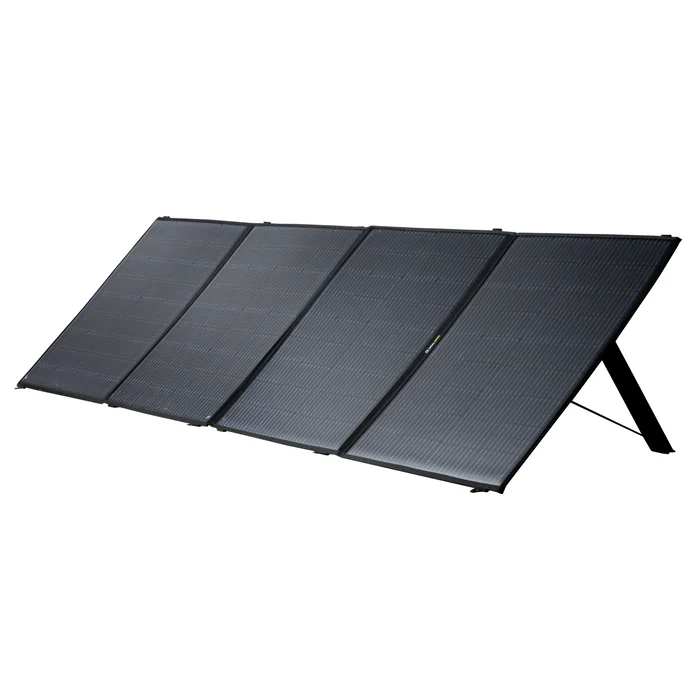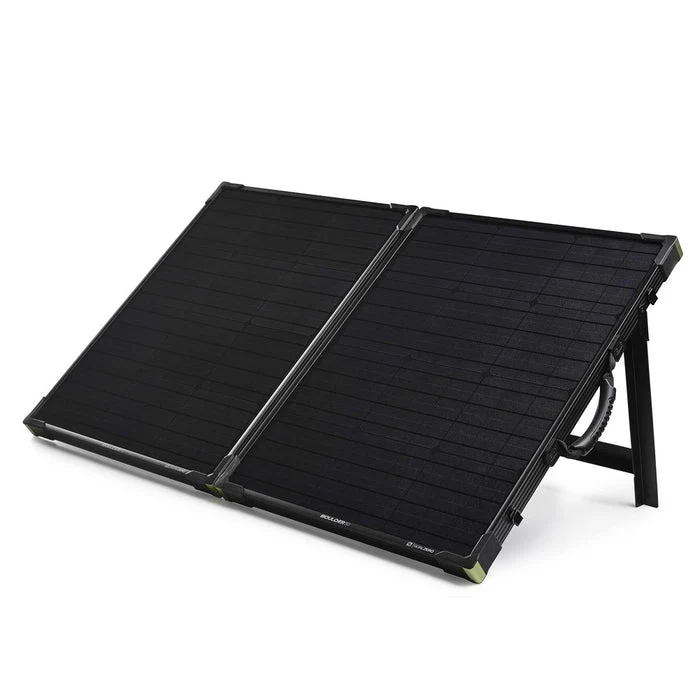
A solar panel can be designed more like a rigid piece of equipment than a foldable fabric accessory. The Goal Zero Boulder 100 Briefcase uses two hinged panels with tempered glass and an aluminum frame, giving it that different construction approach.
A Briefcase Shape for Transport
Goal Zero lists a total 100W rating from two 50W sections. The hinge lets the assembly fold, and a protective canvas bag is described. I'd check the folded dimensions and listed 25.9-pound weight against the vehicle space and carrying distance.
- Total rated power: 100W.
- Panel arrangement: Two hinged 50W sections.
- Construction: Tempered glass and aluminum frame.
- Transport: Protective canvas bag.
It Generates Power, It Doesn't Store It
The panel supplies energy when exposed to suitable sunlight and connected to compatible equipment. It doesn't become a charged battery that can be used later on its own. Evening use requires the energy to have been stored in a suitable bank or station.
Check connector, voltage, and current compatibility with the exact receiving unit. A suitable wattage label alone isn't enough, and an adapter doesn't automatically settle electrical compatibility.
Practical Solar Expectations
Actual output changes with sun angle, shade, weather, and temperature. I'd plan a useful setup location where the panel can be adjusted without becoming an obstacle. Even a small shaded section can affect collection, so placement deserves attention.
The manufacturer's charging examples depend on the station and conditions. I wouldn't convert the 100W label into a guaranteed hourly refill without checking what the receiving equipment actually accepts.
I haven't measured the Boulder panel. I'd compare it for vehicle-based use where the rigid glass-and-frame design is appealing and the carrying weight is acceptable. For a walking trip or a very limited storage space, a lighter panel format may fit the routine better.